Two Faces of Liberty
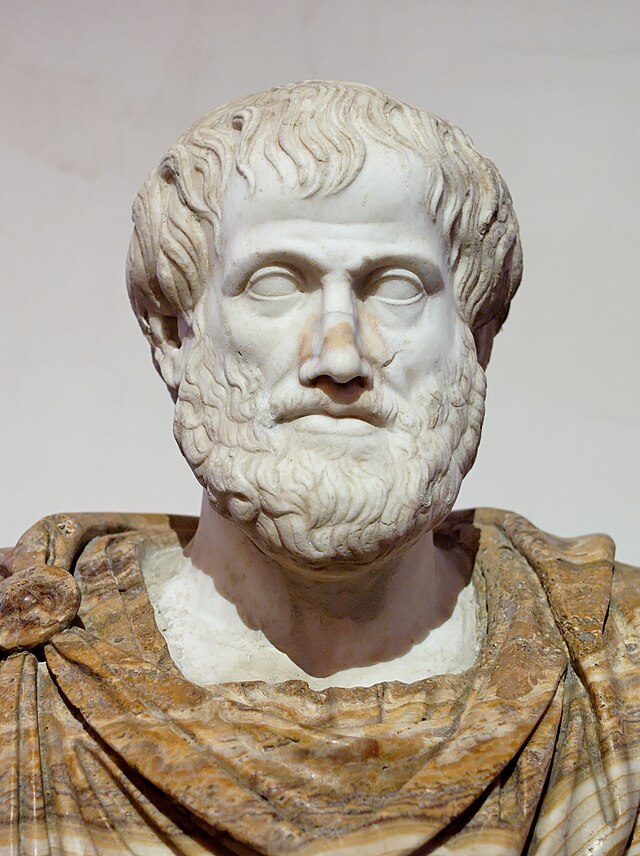
Aristotle identifies two distinct principles that democratic freedom comprises. The first is political: to govern and be governed alternately. The second is personal: to live as one pleases. These two are related but not identical, and they can pull in different directions.
Now the foundation of a democratical state is liberty, and people have been accustomed to say this as if here only liberty was to be found; for they affirm that this is the end proposed by every democracy. But one part of liberty is to govern and be governed alternately; for, according to democratical justice, equality is measured by numbers, and not by worth:
Numerical Equality
Democratic justice measures equality by number, not by worth. This is, Aristotle insists, a real and defensible principle of justice — not a mere popular misconception. The numerical equality of citizens before the law and in the assembly expresses a genuine moral insight: that each person's interests count for one, and that political decisions should reflect the interests of all.
Where Aristotle finds fault is not in the principle itself but in its unlimited extension. When democracy treats numerical equality as the supreme principle — overriding law, expertise, and virtue — it becomes unstable. The assembly that can override anything eventually overrides the conditions of its own stability.
The Danger of Extreme Democracy
The most extreme form of democracy is one where the assembly, representing the will of the majority at any given moment, takes precedence over permanent law. This is, for Aristotle, democracy's degenerate form — not because majority rule is wrong but because a constitution with no fixed points of reference has no mechanism for self-correction. Demagogues flourish in this environment, flattering the people's immediate desires at the expense of their long-term interests.
Democracy Worth Defending
By contrast, a democracy governed by law — where officials are elected by lot or by vote but the law stands above any official — is among the more durable forms of government. It combines popular participation with institutional stability. The people govern, but not arbitrarily. Aristotle's analysis is a reminder that democracy is not a single thing: the word covers a range of constitutions, from the robust to the precarious.
Democracy and its principles are examined in Book VI, where Aristotle analyses both the foundations of democratic liberty and the practical arrangements needed to sustain democratic government.