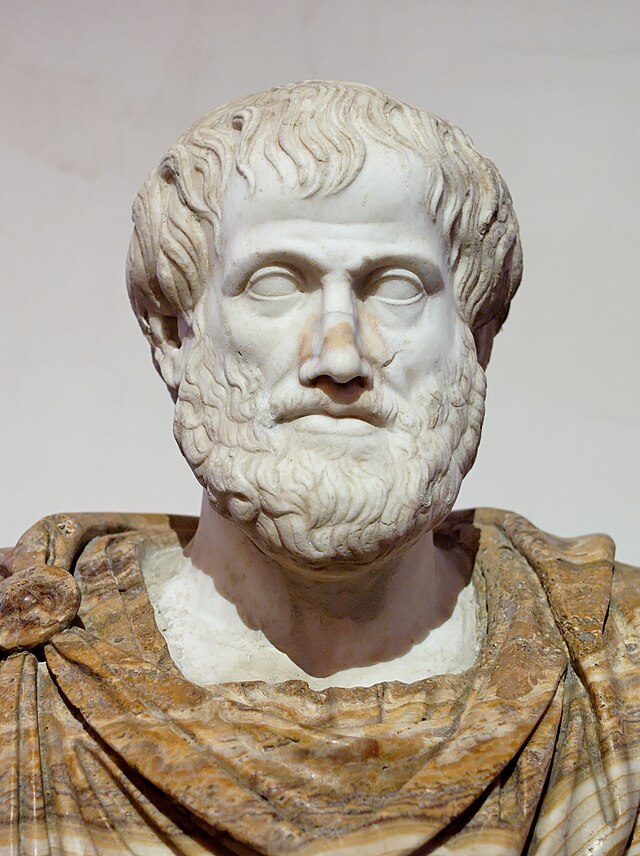
The Framework
The primary axis is normative: does this constitution rule for the good of all, or for the benefit of the rulers alone? The secondary axis is numerical: is supreme power held by one, by few, or by many? Combining these two axes gives six possibilities.
Since then we have said that there are three sorts of regular governments,
and of these the best must necessarily be that which is administered by
the best men... who are able to govern and be governed in such a manner
as will make life most agreeable
The Three Correct Forms
Monarchy is the rule of a single person for the common good. Aristocracy is the rule of the few best people for the common good — the word means rule of the excellent. Polity (politeia) is the rule of the many for the common good. Each is a genuine form of political community.
The Three Perversions
Each correct form has a corresponding perversion. Tyranny is monarchy turned to the ruler's advantage. Oligarchy (literally, rule of the few) is aristocracy corrupted — it is defined not by birth or excellence but by wealth. Democracy — at least in Aristotle's pejorative sense — is polity corrupted, where the poor rule in their own interest rather than the common interest.
Aristotle is careful to note that in practice, oligarchy and democracy are distinguished more by wealth and poverty than by the number of rulers. A constitution where a wealthy minority rules for its own benefit is an oligarchy even if that minority happens to be numerous. A constitution where the poor majority rules for itself is a democracy even if the poor happen to be few.
Polity: The Practically Best
In practice, Aristotle regards polity — the mixed or constitutional government that blends elements of oligarchy and democracy — as the most achievable form of good government for most cities. It avoids the extremes of both and is stabilised by a large middle class. Pure monarchy and pure aristocracy are theoretically superior but require extraordinary conditions and extraordinary men.
Legacy of the Classification
The sixfold typology was adopted by Polybius, Cicero, and later by Machiavelli and Montesquieu. The idea that constitutions tend to cycle through their correct and perverted forms — known as anacyclosis — became one of the most durable ideas in the Western political tradition. The classification also planted the seed for the doctrine of mixed constitutions, the idea that the best government combines elements of all three correct forms.
The sixfold classification of constitutions is set out in Book III, Chapters 6-8, in the context of Aristotle's analysis of what distinguishes correct from perverted government.