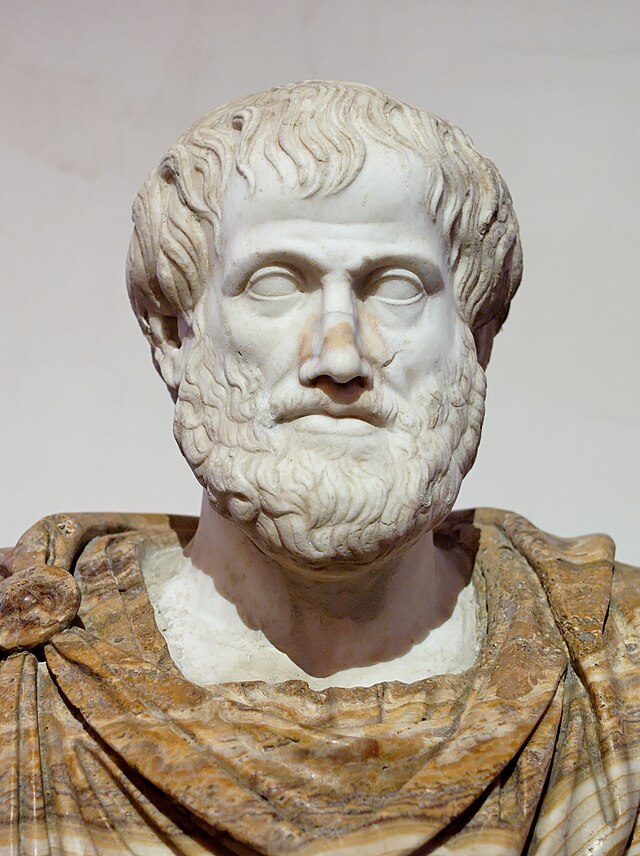
The Evidence of Speech
Aristotle arrives at his famous conclusion through an argument about language. Every animal has voice — the capacity to signal pain and pleasure. But speech is something more. Speech alone allows us to express what is expedient and harmful, just and unjust. And the sharing of these concepts — the ability to hold a common view about justice — is what founds a household, a village, and ultimately a city.
The gift of speech also evidently proves that man is a more social animal than the bees, or any of the herding cattle: for nature, as we say, does nothing in vain, and man is the only animal who enjoys it.
Prior to the Individual
The city is not a convenient arrangement that individuals enter for mutual benefit. It is prior to the individual in a specific sense: a hand severed from a body is a hand in name only. The individual outside the city is similarly incomplete. The city is the context within which human capacities — for reason, for virtue, for justice — can actually be exercised and fulfilled.
This puts Aristotle in direct opposition to any view that treats political society as an artificial construction built on top of naturally solitary individuals. For Aristotle, the solitary person is a deficient form of the human, not the natural baseline. Society is not the constraint on freedom — it is the condition of its possibility.
Natural but Not Automatic
That humans are naturally political does not mean that any given political arrangement is natural or just. The argument cuts both ways. Because man is made for political life, a tyranny that corrupts or stifles his political nature is a violation of nature, not a fulfilment of it. The best city is the one that most fully actualises the political nature of its citizens.
What This Means for Politics
The political animal thesis has endured because it refuses the two easy extremes: that politics is purely natural (and therefore whatever exists is justified) or purely artificial (and therefore what exists is always provisional and subject to rational redesign). For Aristotle, politics occupies the space between instinct and pure reason — shaped by nature, completed by law, capable of excellence or corruption.
The concept of man as a political animal (zoon politikon) is introduced in Book I, Chapter 2 of the Politics, in the context of Aristotle's argument for the naturalness of the city.