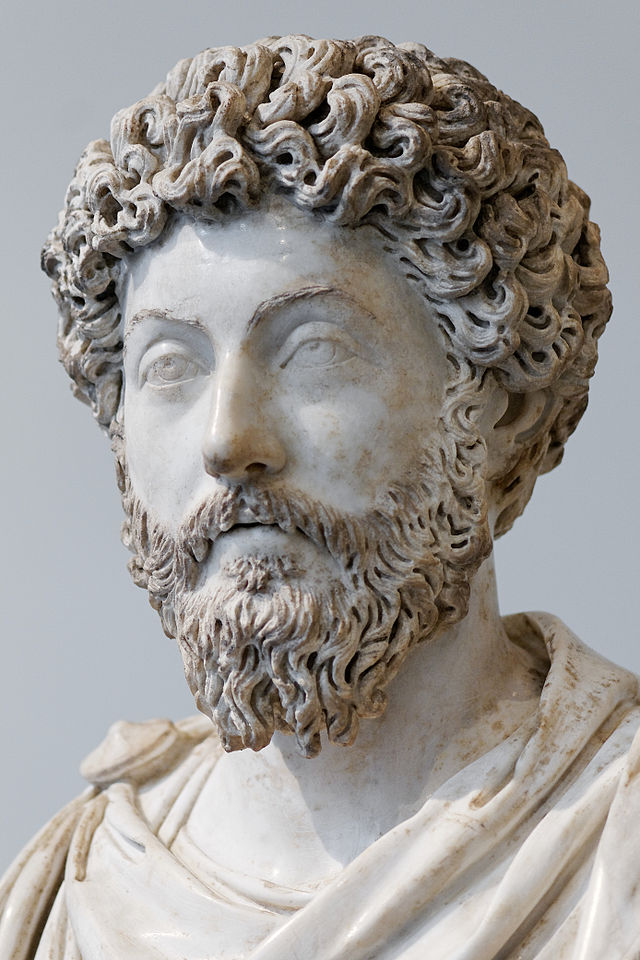
Amor fati — love of fate — is perhaps the most demanding Stoic teaching. It is not enough, Marcus argues, merely to accept what happens to us. The Stoic aims to love it, to find in every event exactly what is needed for their growth and virtue. "Accept the things to which fate binds you," he writes, "and love the people with whom fate brings you together." The logic runs deep. Nature, for the Stoics, is governed by the Logos — a rational ordering principle — and every event, including suffering and loss, is part of that order. To resist what is fated is to fight against Nature itself, a battle you cannot win. But to embrace it, to say yes to what is, transforms even adversity into fuel. This is not the passivity of someone who has given up. Marcus was a tireless general, a reforming administrator, a man who spent decades fighting campaigns he had not sought. Amor fati is compatible with vigorous action — it simply means that once you have acted rightly, you release attachment to the outcome. If plague comes, face it. If war comes, fight it. If death comes, meet it with dignity. The teaching anticipates Nietzsche's famous formulation by seventeen centuries. But where Nietzsche used it as a battle-cry of will, Marcus made it a quiet daily practice: receive each morning as a gift, whatever it contains, and work with it rather than against it.
Related Concepts
The Dichotomy of Control
Marcus Aurelius
Not started
Memento Mori
Marcus Aurelius
Not started
The Inner Citadel
Marcus Aurelius
Not started