The River
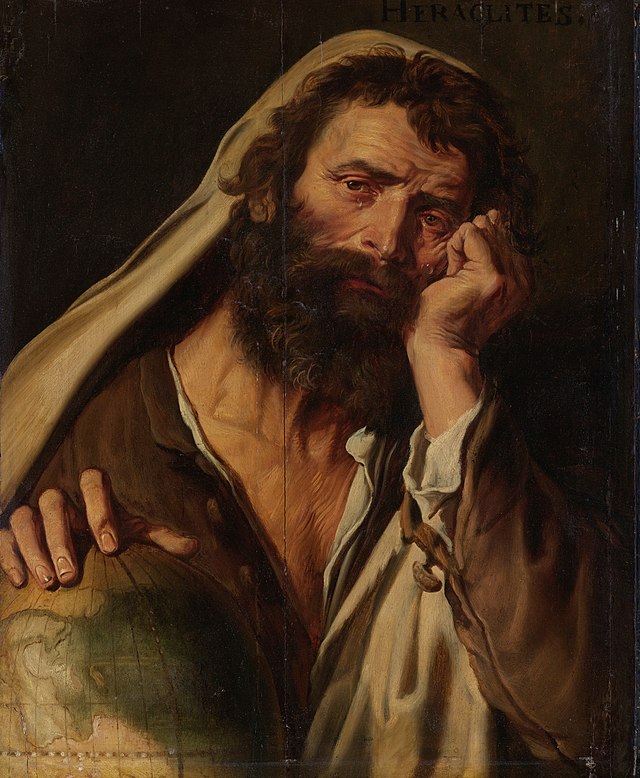
The river metaphor is Heraclitus's most enduring image. In the fragments, he writes that those who step into the same river find different waters always flowing through them. The river keeps its name, its banks, its character — yet the water that makes it a river is never the same water. What we call identity is not a thing but a pattern, a continuity of form sustained by endless replacement.
Into the same river you could not step twice, for other waters are flowing.
The insight cuts both ways. Not only is the river different each time — you yourself are not the same person who stepped in before. Both you and the river are processes, not things; patterns of change, not stable substances. The idea anticipates modern physics, in which particles are excitations of underlying fields, and neuroscience, in which the self is a narrative the brain constructs rather than a fixed essence it discovers.
Unity of Opposites
For Heraclitus, change is not random chaos. It is structured by the tension and unity of opposites. Day becomes night; the living die and the dead come to life; the road up and the road down are the same road. Opposites do not cancel each other out — they constitute each other. Cold needs hot to be cold; rest is rest only against the background of motion.
The way upward and downward are one and the same.
This idea — that reality is constituted by polar oppositions in dynamic tension — would echo through Hegel's dialectic, Nietzsche's philosophy of contradiction, and twentieth-century process philosophy. Alfred North Whitehead's metaphysics, in which the universe is a process of becoming rather than a collection of static things, is perhaps the most direct heir of Heraclitean flux.
Heraclitus was nicknamed "the Obscure" in antiquity for his deliberately difficult style. He seems to have written in oracular prose — dense, riddling, and resistant to easy paraphrase. The river fragments we have may be imperfect summaries of a richer argument rather than his exact words.