No Self to Find
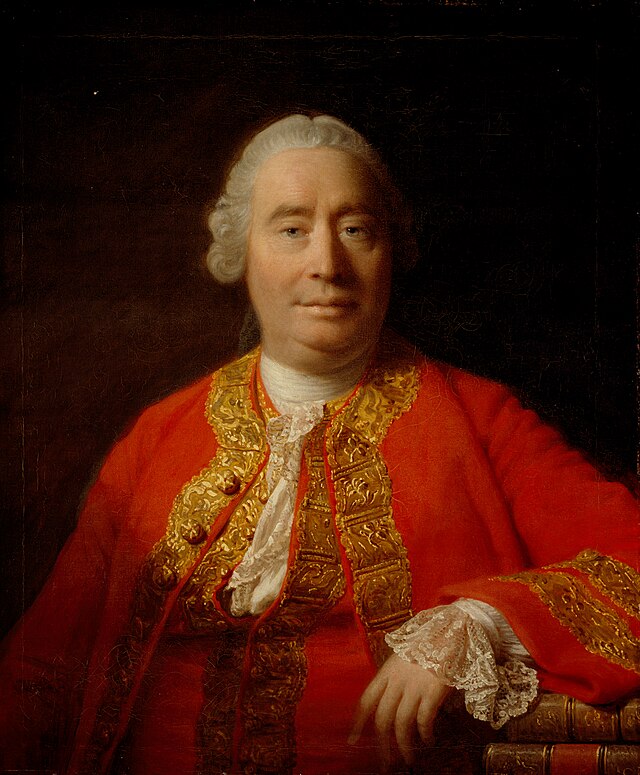
Hume reports that whenever he enters most intimately into what he calls himself, he always stumbles on some particular perception or other — heat or cold, love or hatred, pain or pleasure. He never catches himself without a perception. There is no bare self, only the stream of experience.
The mind is a kind of theatre where several perceptions successively make their appearance — there is properly no simplicity in it at one time, nor identity in different.
A Bundle of Perceptions
What we call the self is, on Hume's account, a bundle or collection of different perceptions united by certain relations — resemblance, causation, contiguity. Personal identity is a fiction we impose on the succession of experiences, not a metaphysical fact we discover.
Hume's bundle theory anticipates by two millennia the Buddhist doctrine of anattā — no-self. Both traditions deny a persisting substantial self and explain apparent continuity through causal and associative relations between momentary states.