The Inductive Step
Inductive reasoning moves from observed instances to general conclusions: the sun has risen every day, so it will rise tomorrow. But what justifies this inference? Only the assumption that the future will resemble the past. And what justifies that assumption? More induction. The argument is circular.
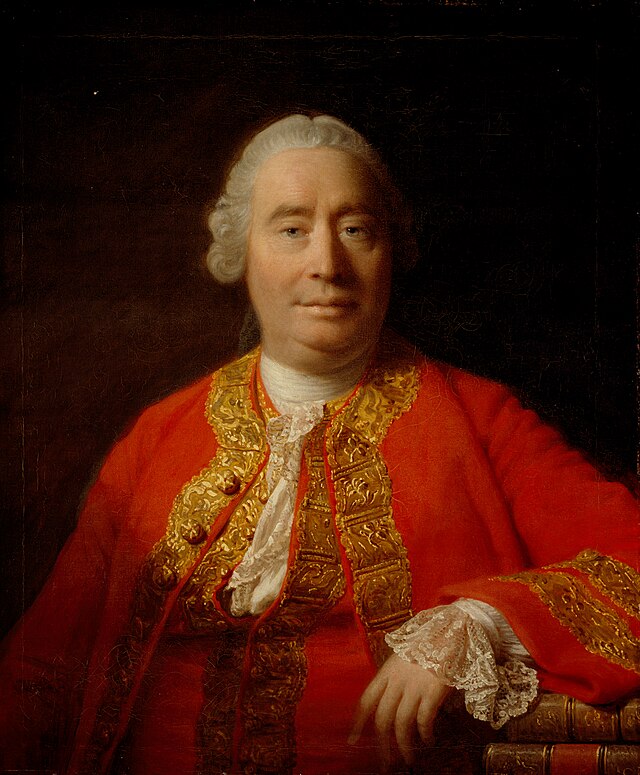
It is not reason which is the guide of life, but custom.
Custom, Not Reason
Hume's conclusion is not that induction is unreliable in practice. It is that induction cannot be rationally grounded — its authority comes from custom and habit, not logical necessity. This is not scepticism about daily life; it is a precise claim about the limits of reason.
Bertrand Russell captured the puzzle with the story of the inductivist turkey: fed every morning for a year, it concludes that feeding always happens in the morning — until Christmas Eve. No amount of past experience can logically guarantee future experience.
Karl Popper's solution to Hume's problem was falsificationism: science does not proceed by confirming theories through induction but by attempting to falsify them. A theory is scientific only if it makes predictions that could in principle be false.